The ATLAS Heavy-Ion Torino group took part in the 13th International Conference on Hard and Electromagnetic Probes of High-Energy Nuclear Collisions (Hard Probes 2026), held at Vanderbilt University in Nashville from 21 to 26 June 2026. The conference brought together the heavy-ion community to discuss the latest experimental and theoretical developments in hard and electromagnetic probes of hot and dense QCD matter.
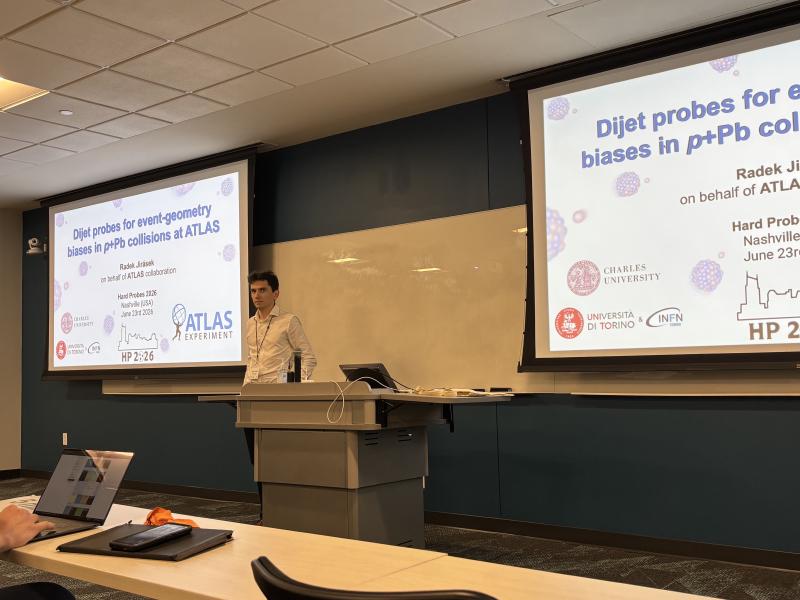
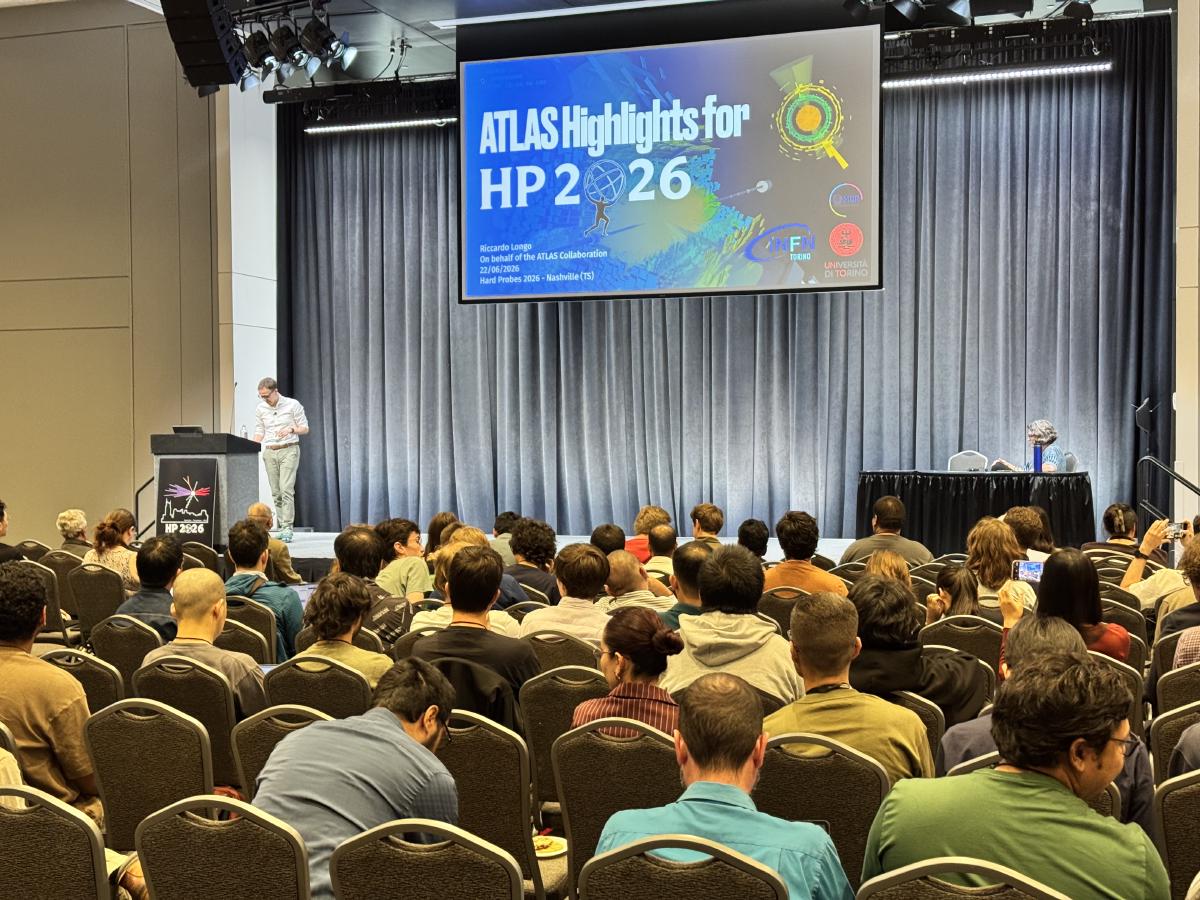
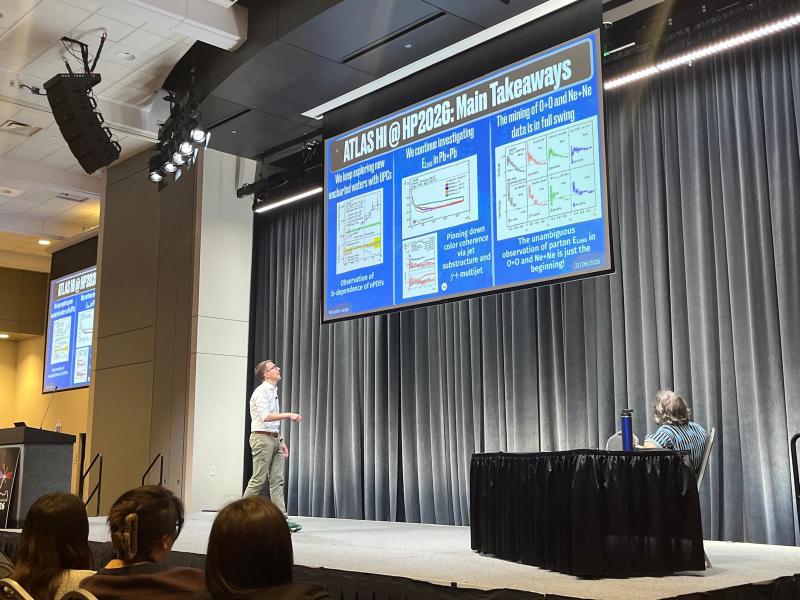
The Torino group contributed to the scientific programme with two presentations. Dr. Riccardo Longo delivered the plenary ATLAS overview, highlighting recent results from the experiment’s heavy-ion programme. Of particular interest, the first observation of parton energy loss in O+O and Ne+Ne collisions arXiv:2606.20463 - sub.PRL, led by graduate student Matthew Hoppesch, and the first observation of impact parameter dependence of nDPFs in Ultra-Peripheral Collisions (read more on CERN Courier). Graduate student Radek Jirasek presented Dijet probes for event-geometry biases in p+A collisions at ATLAS in the high-\(p_{\mathrm{T}}\) parallel session, illustrating how dijet measurements can provide new insight into collision geometry and initial-state effects in proton–nucleus collisions.